CDRO — Platform Port to Unify
Early structural exploration — fitting CDRO into the Unify SaaS platform
CDRO’s product model had developed independently: its own navigation conventions, org hierarchy, and surface structure. The Unify platform introduced a shared navigation shell and a unified structural model across all CloudBees products. Fitting CDRO in meant unpacking assumptions baked into the product for years — and answering what modular navigation actually looked like in practice.
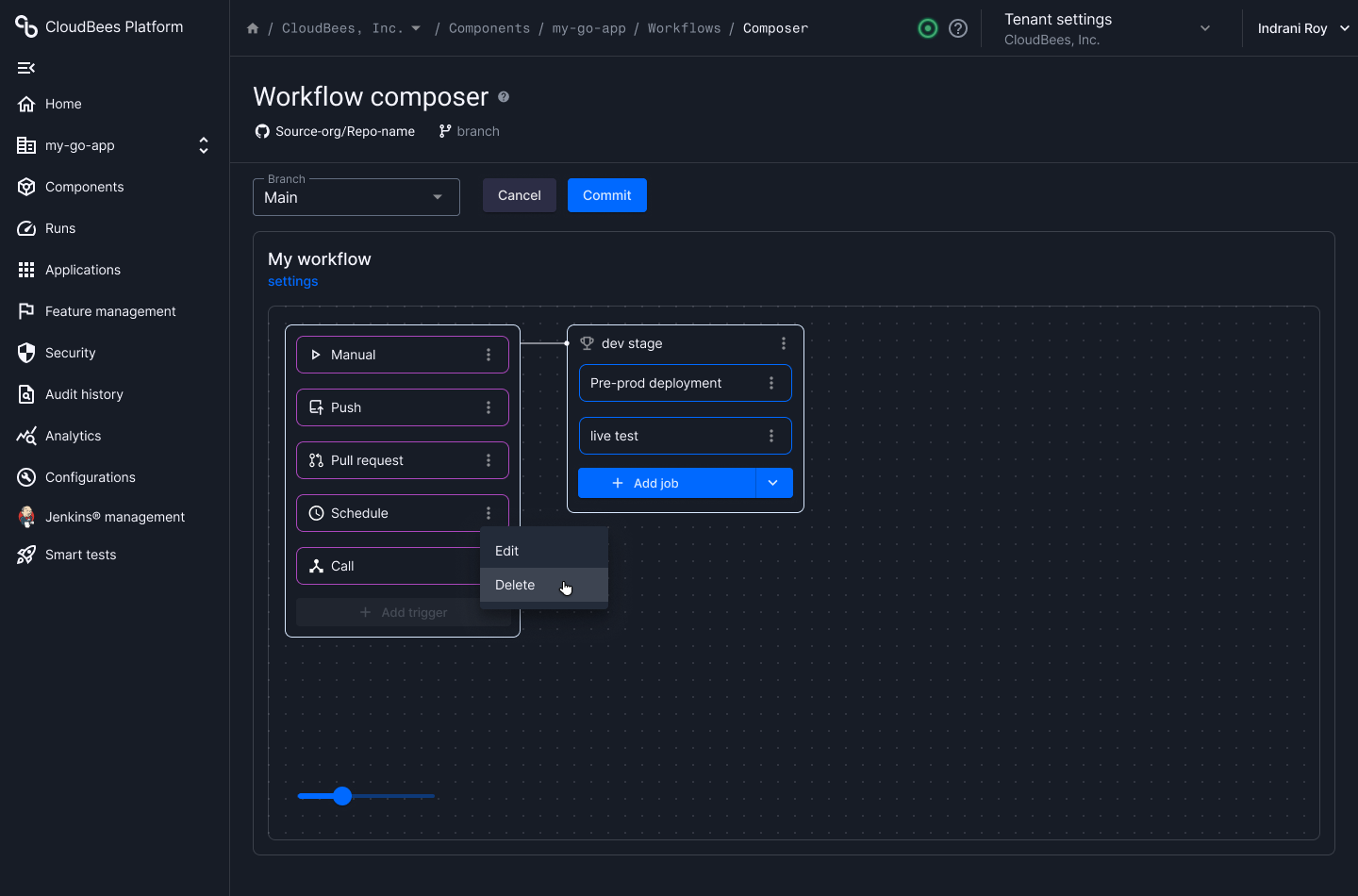
Built an early prototype exploring how CDRO could sit within the Unify SaaS shell. The focus was structural rather than visual — how the org hierarchy mapped across, how navigation modularity could flex between products, and where the seams between CDRO’s existing model and the new platform would fall. A team sync captured the thinking in real time, surfacing the structural questions that would shape the broader Unify effort.
CDRO in Unify